Beyond the Dunes: Coral Pink Sand Dunes
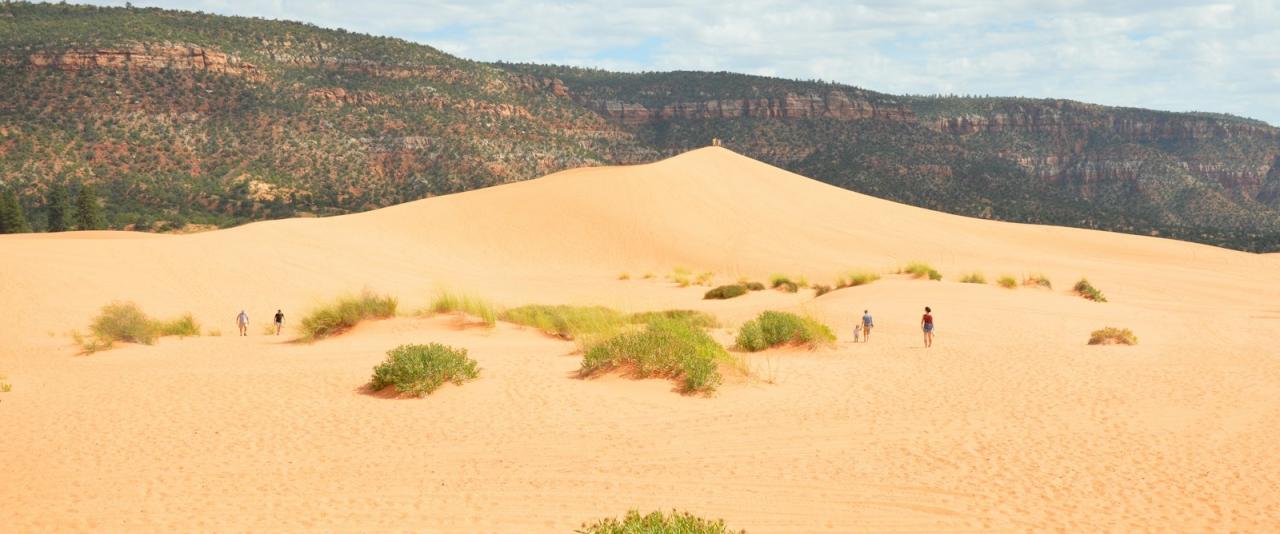
The main sand playground near Kanab is Coral Pink Sand Dunes State Park, about 20 miles west of town off US-89 via Hancock Road. The dunes formed from eroded Navajo Sandstone, with wind funnelled through a notch between the Moquith and Moccasin mountains dropping the sand here, and the iron-stained grains give them their pink-orange colour.
Most of the dune field is open to off-highway vehicles, while part of it is fenced off to protect the Coral Pink Sand Dunes tiger beetle, an insect found nowhere else on Earth. The park charges a day-use fee, and machines on the dunes must fly a safety whip flag so other riders can see you over the crests.
The Logistics of Arrival: GPS and Connectivity
Cell service is patchy once you leave US-89, so download offline maps before you leave Kanab and carry a paper map as a backup. Wind reshapes the dunes constantly, erasing tracks and shifting landmarks, so stay on designated routes and keep your group together.
If you don't own a machine, outfitters in Kanab and along Hancock Road rent ATVs and UTVs and run guided tours, including the sandy ride up to Peek-a-boo slot canyon north of town. Utah requires OHV registration, and young riders need an OHV education certificate, so check the current rules with Utah State Parks before you ride.
Gear Up: Sun, Sand, and Safety
The desert sun here is unforgiving, and your preparation should reflect that reality. This is not a casual afternoon stroll; it is an expedition into a harsh environment.
Start by lacing up sturdy, closed-toe shoes. Loose sandals offer zero protection against sharp rocks, hidden cacti, or sudden dune shifts. Your feet need armor.
Pack layers strategically. Temperatures plummet rapidly once the sun dips below the horizon, and the drop can be shocking. What feels warm at noon can become biting cold by dusk.
Slather on high-SPF sunscreen generously before you even step out the door. The reflection off the sand intensifies UV exposure, making midday burns inevitable without protection.
Protect your eyes with secure, wraparound shades. Blowing sand is relentless, irritating, and can temporarily blind you if your eyes are exposed.
Carry water. Bring twice what you think is necessary. Hydration is not a suggestion; it is a survival metric.
Trust your gear. Respect the landscape. Ride with confidence.
Hydration and Sustenance Strategy
Dehydration in the desert is a silent thief. It does not announce itself with pain until it is already too late. Your water strategy must be proactive, not reactive. Plan to carry at least one gallon of water per person for every day you spend in the field. Relying on local supplies or hoping to find an oasis is a gamble you cannot afford to lose.
Before you even think about starting your ride, ensure everyone in your group is fully hydrated. This initial step sets the physiological tone for the entire adventure. If you start the day dehydrated, your body will struggle to regulate temperature, leading to early fatigue and impaired judgment.
As you pack, prioritize high-energy, non-perishable snacks. Trail mix, dried fruit, and energy bars provide steady fuel without the weight of heavy, perishable goods. These small bursts of energy keep your blood sugar stable when the monotonous landscape begins to drain your mental stamina.
Stay prepared. Respect the environment. And remember: in the desert, preparation is not just about comfort; it is about survival.