The Warmth of the Cabin Threshold
The wind doesn’t just blow in Garden City; it hunts. I watch white flakes accumulate on the pine boughs outside, a silent counterpoint to the sharp bite of the cold against the windowpane. Inside, however, the world is suspended in amber light. Steam rises lazily from a chipped enamel mug, carrying the rich, earthy scent of locally roasted coffee. This quiet moment is the anchor of the day. After hours on the frozen expanse of Bear Lake, the heat feels less like a luxury and more like a hard-earned reward. We gather close to the cast-iron stove, sharing stories that grow louder with every sip of hot chocolate. The air here is crisp, still, and deeply breathable. It is a simple, safe haven where time slows down. We rest. We breathe. It is enough.
Ice Wisdom: Safety First on the Ice
Bear Lake’s sheltered bays often wear a mask of deceptive calm. To the untrained eye, the surface is a solid sheet of promise, but beneath the snow lies an unpredictable landscape. Bear Lake does not freeze over every winter, so check current ice reports with Bear Lake State Park or the Utah Division of Wildlife Resources before you plan a trip. I have watched the ice form over decades, yet I never assume safety. Visual inspection is only the starting line. Before you step out, look for uniform, clear blue ice—that is the color of strength. White, bubbly, or gray patches indicate air pockets and weak structures that can collapse without warning.
Always keep ice picks within immediate reach, tucked securely into your belt or pocket. These small steel tools are not accessories; they are a vital lifeline if the ice gives way. Never venture onto the lake alone, even if the conditions seem perfect. A single fracture can change everything in an instant. Bring a companion, carry a reliable method to call for help, and dress in moisture-wicking layers to prevent hypothermia. Your family’s safety depends on this constant vigilance. Trust your eyes, not just your feet. Stay safe, and respect the winter landscape.
The Gear and the Grind
Stepping onto Bear Lake’s frozen surface feels less like walking and more like entering a glassy, silent arena. The air here is thin and sharp, stripping warmth from exposed skin with ruthless efficiency. Survival requires more than hope; it demands strategy. Start with a moisture-wicking base layer to keep sweat away from your skin, then add insulation, treating each layer as a shield against the biting cold. Insulated boots are non-negotiable; they create the necessary barrier between your feet and the sub-zero ice.
Anglers here target cutthroat and lake trout, and in January some dip-net the Bonneville cisco, a small fish found only in Bear Lake, but the real secrets are found in the details you pack. A thermos of black coffee, kept hot in a vacuum-sealed container, can be the difference between shivering through a wait and enjoying the solitude. Check the ice thickness rigorously. Four inches of clear, blue ice is the bare minimum for walking, but clarity does not always equal safety. Look for opaque white patches that signal trapped air bubbles. That distinction is the difference between a solid foundation and a fragile shell. Safety is not an afterthought. Tell someone your exact location and your expected return time. If you do not check in, they will know where to look. With the right gear and a deep respect for the lake’s moody temperament, you can enjoy the serene beauty of the Bear Lake Valley without fear.
The Catch and the Quiet
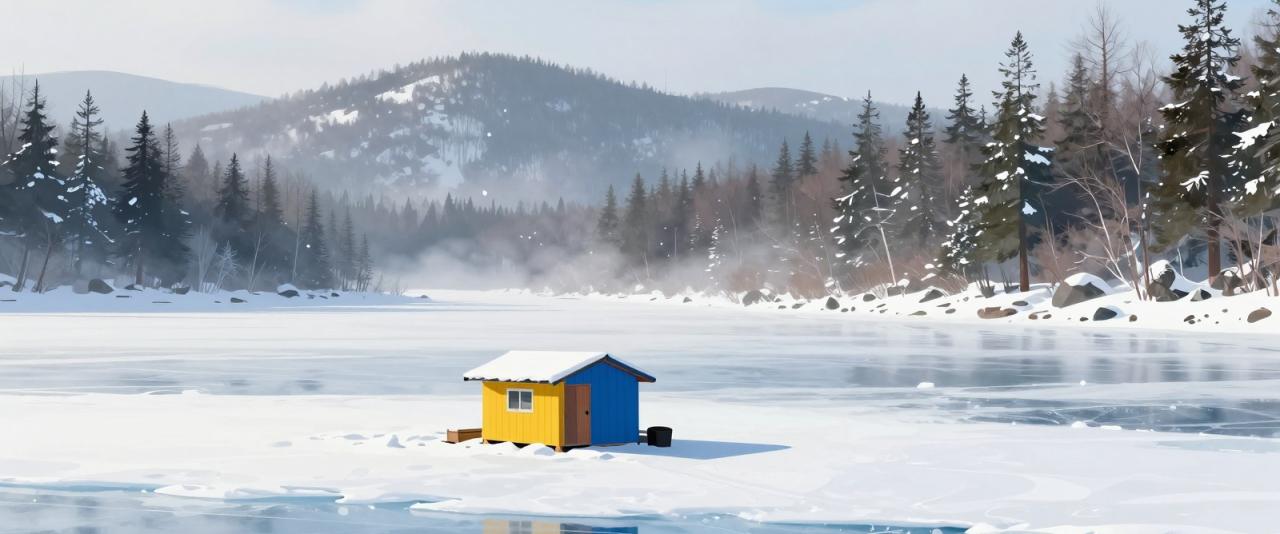
The frozen surface of Bear Lake stretches out like a blank page, demanding only your attention. The air carries a sharp chill that wakes every nerve ending, yet there is a profound comfort in knowing a warm cabin waits just beyond the tree line. I stand still, watching my breath plume in the crisp morning light, feeling more alive than I have in months.
Drilling through the thick ice is a rhythmic, meditative act. The auger bites into the ice, breaking the seal between the cold air and the dark, liquid world below. Dropping the line into that small, circular void transforms the landscape from a vast white expanse into a focused point of potential. This isn’t merely about waiting for a bite; it is about surrendering to the quiet. In these moments, silence ceases to be an absence of sound. It becomes a tangible presence, heavy and sweet. I find myself simply existing, letting the stillness wrap around me like a wool blanket. The cold is real against my skin, but so is the peace that settles in my chest. There is no need to rush, no need to fill the space with noise. Just the ice, the line, and the quiet.
Warmth and Comfort After the Cold
The heavy wooden door clicks shut, instantly severing the connection to the howling gale outside. Inside, the air hangs still and thick, carrying the scent of dry pine and woodsmoke. You peel off soaked gloves, fingers already tingling as circulation returns, and give your boots a firm shake to dislodge the clinging snow. The cast-iron stove radiates a steady, amber glow, its crackling embers offering a tangible promise of shelter. Draping a rough-spun wool blanket over your shoulders adds a grounding weight, anchoring you to the moment. As steam curls from a chipped enamel mug of hot chocolate, the rest of the family settles into a circle of quiet companionship. This isn’t just warmth; it is the physical sensation of safety returning to your core. The biting chill outside fades into irrelevance, replaced by the simple, profound comfort of being together.